

To find an Integrative Medicine professional in your area, visit:
https://awcim.arizona.edu/publicListingSearch/fip.html
To find out more about Andrew Weil and the Center, visit:
https://awcim.arizona.edu/
To ask your question for a future podcast, call or text 1-646-543-7836
Synopsis
In this podcast, Dr. Stephen Dahmer discusses his journey into integrative medicine, emphasizing patient-centered care and the role of the Andrew Weil Center for Integrative Medicine at the University of Arizona. Dahmer highlights the need for a holistic approach, including lifestyle modifications and plant-based therapies. He also mentions ongoing research on sleep health and the potential of personalized medicine. The discussion underscores the importance of integrating complementary therapies into mainstream healthcare to improve overall health outcomes.
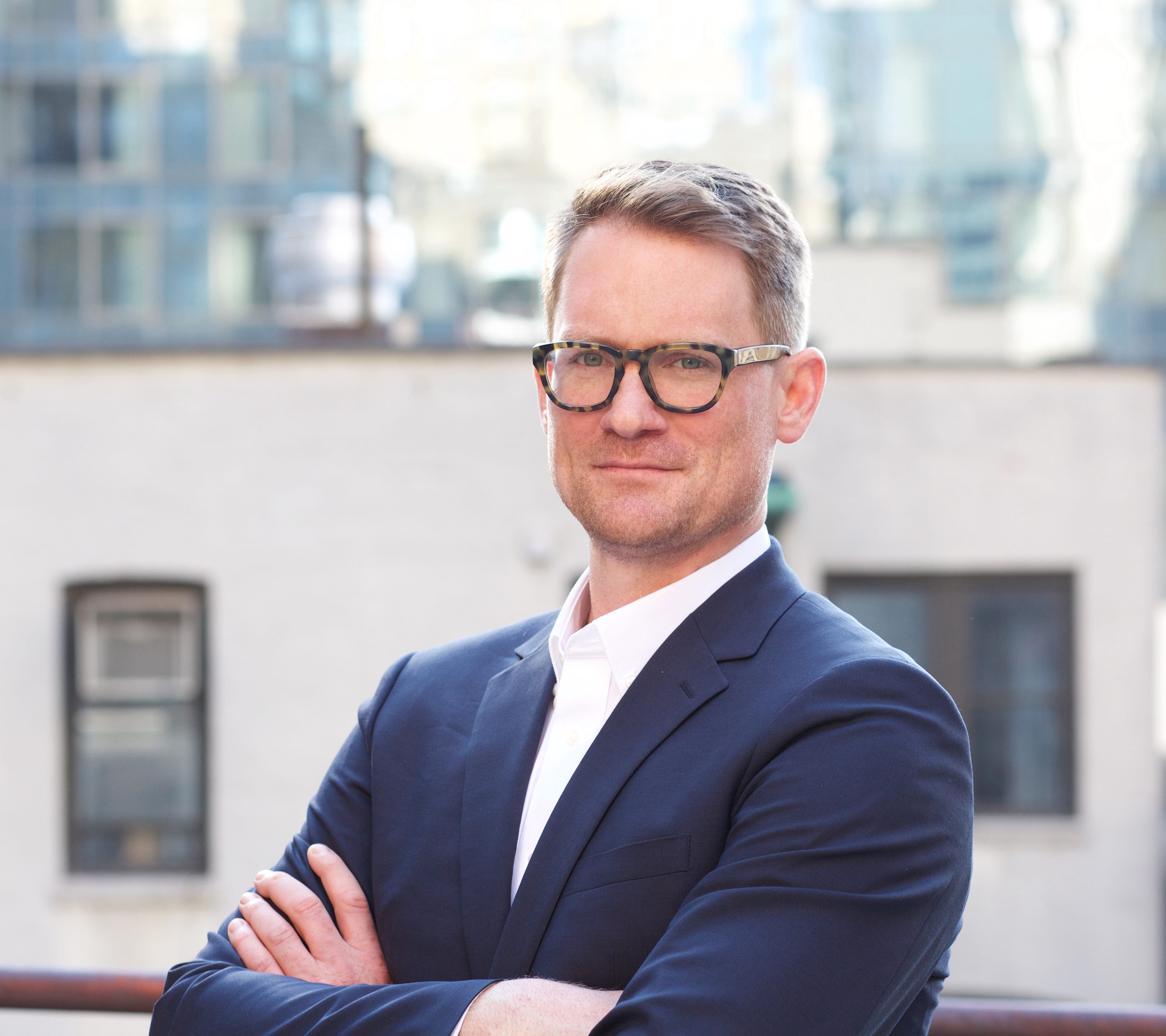
Dr. Dahmer Bio
As Director of the Andrew Weil Center for Integrative Medicine (AWCIM), Dr. Stephen Dahmer champions integrative medicine and plays an integral role in transforming modern healthcare. As a cornerstone of the University of Arizona, the Center empowers thousands of healthcare practitioners to deliver evidence-based, integrative care that profoundly impacts lives.
In his dual role as director and practicing physician, Dr. Dahmer is unwavering in his commitment to pioneering new standards in compassionate, patient-centered 1care through research, teaching, and clinical practice.
Dr. Dahmer’s dedication to reshaping healthcare has taken him across the globe, from the favelas of Brazil and the Maori communities in New Zealand to serving as a hospitalist in the Navajo Nation in Arizona.
His distinguished career has included academic and clinical roles at institutions such as Mount Sinai School of Medicine, Albert Einstein College of Medicine, and the University of Arizona. He is triple board-certified in Family, Integrative, and Lifestyle Medicine.
Throughout his journey, Dr. Dahmer has held influential positions, including Lead Physician at Iora Health, Chief Medical Officer at Goodness Growth, and founding Primary Care Physician at Sana Care.
Dr. Dahmer’s research focuses on uncovering the real-world outcomes of integrative therapies and the healing potential of medicinal plants, driving forward a vision of healthcare centered on whole-person health that nurtures and inspires both practitioners and patients.
Transcript
The hosts are journalist Sven Hosford and medical doctor Dr. Chet Fox.
Sven: How did you get started in Integrative medicine? What drew you into this arena?
Dr. Dahmer: I usually go back to my mother. Growing up in Cheboygan, Wisconsin, a town of about 48,000 at the time, my mother discovered our local food co-op when I was very young, and we would eat peanut butter with the oil still on top and no sugar added. She was probably the first woman that I know of to make falafel at our house. My father, a Hungarian immigrant, and I grabbed our vegetables from our Hungarian hot peppers that I ate at a young age, plus lettuce and spinach from our own backyard, and my life was integrative, as many of our lives are.
Seeing how important that is in the lives and the health of the people that I love growing up. I first saw an integrative lecture during my first year at the University of Wisconsin Madison.
I’ll tell you about a close colleague who gave a one-credit elective lecture on botanicals. I said, “This is really fantastic, and I am so surprised that it’s not included in my medical training.” That sparked a journey that has lasted 25 years.
Sven: Tell us about the center, the activities at the center, and your role as director.
Dr. Dahmer: I’m very humble in my role as director. It’s really unbelievable that I stand on the backs of giants. Dr. Victoria Mazes was the previous executive director and the founding executive director for 23 years.
The center’s main role is to teach physicians about integrative medicine, something we learn little about in medical school. We’ve offered this education through our fellowship for nearly 30 years. We’ve trained over 2,600 physicians, nurse practitioners, dentists, and PharmDs in integrative medicine.
I myself am a graduate of our fellowship in 2006, and we continue to do that today.
Many of our graduates go on to earn board certification in integrative medicine, and many lead key academic institutions and integrative medicine programs worldwide.
In addition to the fellowship, we are present in over 160 residencies through our integrative medicine and residency program; we have an iHealth program that focuses on nursing, other amazing ancillary staff who support our work, and a team-based approach to healthcare.
We also serve people directly at our beautiful new $23 million center in the heart of an R1 institution, a center of excellence for Integrative Medicine at the University of Arizona.
We offer these classes to the general public to learn about integrative medicine and health, right at our beautiful center.
I was working for Sana Health, a remarkable job, as the inaugural physician. We were offering fully async care. I love that precipice of technology, lowering barriers, expanding access, and delivering high-quality primary care. I had my dream job, and we lived in New York. My wife is a New Yorker. Did not want to move.
We had multiple opportunities. This was the opportunity of a lifetime. I moved my family to Tucson on a mission. I didn’t come for fun. I didn’t come just to take a title. I came to usher in the next era of integrative medicine, because there is still tremendous potential to integrate it into modern healthcare, and I believe that in the depths of my own heart.
Sven: When I heard you got the job, I was so happy for you. We have known each other since we were both in the cannabis industry, which was a whole lot of fun.
Dr. Dahmer: Back to the taboo word of cannabis. It was 20 years ago, but I think it’s Chet’s turn for a question.
Dr. Fox: How would you define, for the totally uneducated person, what integrative medicine is and how it is different than what they see from their doctor now?
Dr. Dahmer: Yeah, I think that’s a great question, Chet. I encourage listeners to visit our website, the Andrew Weil Center for Integrative Medicine. Far better than a couple of lines I can give as a definition of integrative medicine, they can really see it firsthand. They can read the full definition because it is truly a philosophy of care.
In my own words, it focuses first on what matters most to people. Really develops and supports the innate healing potential of the human body. It uses the best available modalities, based on two things: safety and efficacy.
I’d also say it fosters and supports the patient-practitioner relationship as a key element in healing.
That’s my quick definition, but it’s longer than that. And I would just say it looks outside the box.
Usually in medicine, in the last research I looked at, most of us physicians end 72% of our visits with a prescription. I have nothing against pharmaceuticals. I use them regularly. I think they’re tremendous tools for us as doctors. It shouldn’t be the only tool in our box.
And we teach physicians 10, 15, 20 additional tools that we don’t learn about in medical school.
Dr. Fox: So it’s a “both and,” not an “either or.”
Dr. Dahmer: Absolutely, and Chet, I appreciate you saying that. For a long time, it was deemed alternative medicine, which is a bit of a pet peeve.
Anything that we do in integrative medicine, Chet, even you as a physician, should augment, support, and weave into any therapeutic application I offer as a board-certified physician. The two are not anti. It is a “yes and,” absolutely, when done correctly.
Sven: I’m trying not to cheer. I’ve been fighting this fight for a long time. I ran holistic health magazines for 30 years.
Dr. Fox: In our information, we’ll include links to the definition Dr. Dahmer described.
Dr. Dahmer: Dr. Weil’s definition will be the best one. But yeah, definitely put some links in there, so our listeners can learn more. We have a fantastic website.
I consider myself a generalist as a board-certified family doctor. Integrative medicine is even wider in breadth. There’s a lot to cover.
Sven: I have a whole bunch of questions. One thing I’d like to focus on to start is that medicine is practiced in America today in some problematic ways. Can I spotlight a few of the problems and see how integrative medicine addresses them?
One problem is doctors who repeat a narrow scope of their current science, but they don’t really study anything outside their silos. They don’t actually go out and learn anything new—Doctors who don’t disclose known side effects and doctors who don’t understand or believe in nutrition.
How do you talk to doctors like that? Or what do you say to patients to maybe help them find a different doctor?
Dr. Fox: Just going to jump in quickly. In medical school, I received zero hours of nutrition education. Zero. Not even one. I had one hour on statistics one semester. So I had more training hours in statistics that I would never use than in nutrition that would be critical for my patients.
Dr. Dahmer: I think that’s reflective, Chet, of the reality that we find ourselves in.
Sven, I will always be a rose-colored glasses person and see the glass as half full in my personal life and in my professional life. Even in managing my team and in my role as a physician, I like to follow a basic rule: assume positive intent.
A physician who doesn’t want to speak to nutrition probably feels uncomfortable because it’s not their area of expertise. I would also say that, as a family physician, I rely on tremendous expertise so specialized it might seem unbelievable, yet it could fit a patient of mine that no one else could help.
So I really marvel at the technology and the specialization modern medicine and healthcare have achieved.
I think the problem is when we think that it fits everyone. When you’re in primary care, you certainly see a much wider array of patients.
I also feel for my specialist colleagues who sometimes get the toughest patients coming to their doors. The problem is when we take that single approach and apply it to all, right? And that’s where I think we offer too many pharmaceuticals across the board when patients could find other options that might help them find their balance.
Or I’ll steal an endocannabinoid term: homeostasis, which existed before we discussed the endocannabinoid system, but there are many ways to find that balance and to come back to health.
And I think that I would never speak down to another physician in front of a patient, but you wouldn’t go to your mechanic if your plumbing is shot. So if you want to learn about nutrition, you might not go to a specialist who hasn’t studied it.
So it’s sometimes about finding the right healthcare team. For me, that is an integrative physician who can see those different angles, know when a specialist is absolutely necessary, and know when other modalities might better serve the patient’s goals.
To get to that point where I feel better and my quality of life improves comes back to that “what matters most” question.
I think, in medicine, far too often we focus on lowering A1C or systolic blood pressure, Chet, but health is so much bigger than that. And I’m starting to see a pendulum switch. Not that systolic and A1C aren’t important. Of course they are, but health is so much bigger than that.
Sven: Do you think integrative medicine helps teach patients to take more responsibility for their own health, do their own research, and take actions that will improve their health?
Dr. Dahmer: I absolutely hope it would.
I was in clinic this morning. I said to at least one, maybe even two or three of my patients that the river of health, like any river, is impacted by the stones on the side of that river that kind of draw the course of that river. Your river of health, which ended up at my door today, often comes with clinical concerns, symptoms, or otherwise.
We have to move those stones for the river to change course. That will require work on your part. And if we’re going to take an integrative path, I really need buy-in that you’re ready and willing to make some changes in those habits, in those rocks that were a part of your river of health in arriving at my door, and it’s a common line that I state to my patients.
Setting this up is not a one-way path. I am going to give you a silver bullet very, very, very, very few times. There are very, very few times a cure for the ailment or disease that a patient comes to see me as a clinician.
But we can work towards improving your overall health through a cascade that improves your quality of life by participating in integrative and lifestyle medicine interventions.
Dr. Fox: I think that’s really important, and evidence-based medicine is great when there is evidence. Where it went wrong is assuming that if there is no evidence, we should do nothing. And I used to joke with my residents and say, “Where is the evidence that says that is there? There is no evidence. The default is to do nothing.
Dr. Dahmer: I appreciate that, Chet. I would add to that as well. It is not uncommon for a patient to come to see me in my clinic and already have 65 diagnoses. And what we’re often doing is giving the best evidence-based intervention for each and every one of those 65 diagnoses, without trying to find a potential common denominator that might knock off a couple of those.
I think a key example of that is, as a family doctor, it’s estimated that 80% of what I see has stress as an upstream trigger or etiology. Yet, in less than 2% of primary care doctor visits, a patient walks out the door with some technique or approach to handle or mitigate that stress.
Dr. Fox: Along the same lines, and again, stressing the positivity, but Western medicine assumes single cause, single effect, sort of like gravity. You drop something, it falls.
But the body is two things: multiple causes having multiple effects. The other problem with the evidence is that it assumes a single-cause, single-effect model and treats the body as static, not dynamic.
It adjusts to what you know. A person has diabetes, and they eat too much sugar. The body does things to compensate, and depending on their genetics, they can compensate better or worse.
So the body is a very complex machine, and that’s not even talking about the lack of integration. And you were getting at this between mental health and physical health. Or, as I used to tell my residents and my patients: I said, “Well, when I was in medical school, they took a hacksaw and severed the brain from the body. I’ve put it back together in dealing with you.”
Dr. Dahmer: I think that’s so true, Chet. And I think to add to that is, we’ve been served extremely well by a scientific method within the healthcare system that is extremely reductionist, which works extremely well for treating pneumonia or potentially lowering blood pressure.
But when we get into the cascade of a biological system that has symptoms of depression or chronic pain, or even looking to augment my own vitality. These are far more complex than a single intervention and single cause, as you alluded to.
I think tools are becoming more available, including AI, and we might approach that topic as well. These are helping us to move more into that arena. That, I’ll be frank, was daunting for many of us because the reductionist model is a bit of faith in our own system, which gave us the power to address very specific causes, symptoms, and/or diseases.
Dr. Fox: In terms of disciplines, there’s you, but who are the other members of your team, in terms of mental health nutrition? Could you describe either members directly of your team or those you frequently refer to to work together to build an approach?
Dr. Dahmer: Yeah, I think the beauty of it, too, and I think this is one of the things that you learn within integrative medicine.
I’ve heard Dr. Weil say one of his areas of expertise is being a therapeutic broker.
There are a few things, right? That, as long as it’s not causing harm to a patient, is off the table, and I think that is the beauty of really an individual approach based on a strong patient-practitioner relationship.
That could be an interventional radiologist. Certainly, there could be an oncologist. In certain cases, that could be an Ayurvedic physician. That could be a Chinese medicine specialist. I’ll say a dietitian, definitely, is one I commonly refer to and rely on right now.
Physical therapy is another one, and osteopathic manipulation in that realm, as I see a lot of musculoskeletal issues, and health coaching.
I think a lot of what I try to do is shifting those stones that form the path of the river. You don’t do that in a once-a-year visit. It’s got to be actionable. It’s got to be having someone who’s supporting you on that path. It has to be brought to that accessible memory of every day and made a part of your everyday life. Where I think a health coach can be an invaluable tool in helping a patient make that change.
Sven: Stephen, let’s talk about plant medicine, one of our favorite topics, and some things I learned about plant medicine before I was in the cannabis industry.
First of all, somehow humans on this planet managed to survive 200,000 years before there were any pharmaceuticals, largely because we healed ourselves with plants. Is that an accurate statement?
Dr. Dahmer: Yeah, I mean, we’ve survived, and we continue to survive. I think plant-based medicines were a big part of that. I think they still are. I think the majority, a strong percentage of the world’s population still goes to plant medicine as their first line.
Dr. Fox: Along those lines, a lot of the pharmaceuticals were basically plant medicines: foxglove, digitalis; tree bark, aspirin. There was a big issue between environmentalists and cancer specialists over Taxol because the pharmaceutical industry made it from bark from the Brazilian rainforest. Well, not to mention that penicillin is just a mold.
Sven: One thing I learned about plants is that in the plant world, less is more, and I discovered that marvelously in the cannabis industry. That same idea is what really took root for me, and I discovered that as I used less cannabis, I actually got more of the medicinal benefits. Can you explain how that works, Stephen?
Dr. Dahmer: I think that, again, that might be very specific, Sven, to you. But I think that what you’re speaking to in cannabis for me should be a rule across all therapeutic realms, and that is the least effective dose possible.
I do think we have a society that tends to supersize, and I’m afraid of that in the cannabis industry as well. We commoditize it and kind of focus on a single active ingredient, right? A single constituent within a beautiful symphony of molecules, and we supersize it, and everyone gets a little bit too fixated on that.
To speak to cannabis, and even psychedelics, there’s a lot of talk of microdosing, right? Microdosing, from my understanding of the definition, is a dose whereby there is no perceivable effect, and even less than that, and some might put that dose even lower.
I think we’re starting to enter a realm of placebo, where many people have a relationship with a plant or with psychedelics that deeply impacts their physiology.
Also, I think that if you look at the endocannabinoid system, it can be impacted by minute amounts of some of these molecules and doesn’t require a sledgehammer input.
In my years of working with cannabis and studying cannabis and working with patients, Sven, the most common thing I say is, what can we do to lower your dose? Because in our society today, we’re constantly rushing toward a superdose.
Sven: Well, I was going to say you can spread that out into many different aspects of life. Sometimes, with people, a smaller dose is better than too much of them.
Or food. We need far less food than we’re consuming right now. And you’re right. I think it is a problem with Americans in general. We just want more. We think more is better, and plant medicine teaches us that’s not always true.
Dr. Dahmer: And to paraphrase Paracelsus, the dose makes the poison, right? Anything, in the right dose, could have therapeutic benefit, and anything with therapeutic benefit in the wrong dose could cause harm.
Water is a clear example. Many of us, even in the hospital, have seen patients who have overdosed on water in our careers because you can theoretically take too much.
Sven: Apparently, that’s what happened to Bruce Lee. Bruce Lee drank too much water and had some kind of brain seizure or something. I don’t remember exactly what it was, but some kind of condition caused it, and it was because he was drinking so much water during a competition.
So yeah, water can be poisonous.
Dr. Fox: I think one of the points that you’re making that’s just critical is it’s more about balance. It’s about finding the right balance of things within the body, the brain, and the environment.
There was an elegant study before there were really computers; a pediatric pulmonologist in Buffalo just charted every admission for a year with a pin on a map, and he found that 80 to 90% of them were near the Peace Bridge, where the diesel trucks were there, and what happened was the diesel trucks were emitting diesel fuel on the Peace Bridge basically all day long. Kids with asthma ended up in the hospital.
Dr. Fox: Well, it was a remarkable number and a great study, really great sort of epidemiologic study. This was done in the early ’90s, long before the age of computers.
How did you get involved with the Weill Center, and what prompted you to become the director?
Dr. Dahmer: Yeah, real quick, just to reflect on that, Chet, because I do. I want to make a point that, again. We call it integrative medicine, and Dr. Weil has said multiple times he hopes there’s a day that we drop integrative medicine and just call it good medicine.
I really love that because I think far too often in modern healthcare, it’s not always our fault as clinicians; we have rushed visits. We give little time to patients. We might not be able to go beyond that ability to make a great diagnosis and treat that patient with refractory asthma; we might be throwing more and more inhalers at them, or more and more steroids, to help them.
It takes that astute physician, which is a mix of epidemiology; it’s a mix of public health; it’s a mix of curiosity on the part of the physician to look outside the box for that root cause.
I think that’s really a big part of what we’re really trying to share, and I think we’re losing that a bit in modern medicine, in modern healthcare, and not always for our own fault. We just don’t always have time to take that path, which is so important.
Dr. Fox: No, I just thought about this before, and I talked about it earlier, and I said if I had a drug that was dirt cheap, had limited to no side effects, and often cured people 25 to 50% of the time, would you pay for that drug? And the answer is obviously yes. And I go, that drug is a placebo.
Dr. Dahmer: I thought you were going to say exercise?
Dr. Fox: No, no, it’s placebo. The placebo effect. It’s 50% effective in angina, 25% in erectile dysfunction, and it’s so powerful that they have to test against it instead of using it.
I will tell a really cute placebo story. I was a fourth-year student at the VA, and there was this guy who just wanted more and more pain medicine. So it was sort of a substance abuse kind of thing. Said he had belly pain. I distracted him, and he said, “I’d like to give him one cc of normal saline as a shot, and tell him it’s the latest and greatest new pain medicine that we have. Worked beautifully. Four hours later, he was asking for another. Unfortunately, that’s been taken out of our hands.”
Sven: So you gave him saline, and he was fine.
Dr. Fox: Yeah, I gave him one cc of normal saline, and with the placebo effect of me saying, “This is new, this is great.”
Dr. Dahmer: Well, I think, Chet, that you’re walking in muddy waters there. We’ve got to be very careful with that.
Dr. Fox: Oh, we’re not allowed to do it. We can’t do it. It just frustrates me that we don’t.
Dr. Dahmer: Well, I would say that we do. Chet, and there is some recent evidence. IBS is one of the areas where they’ve done open-label placebo trials, and they say to the patient, this is a placebo.
If you listen to the patients’ interviews afterward, they’re unbelievable. It’s unbelievable. “I can’t believe I’m better because I know it was a placebo, and they told me so at the get-go of this trial.”
To your point, we’ve long denigrated placebo as this negative sugar pill to test against, as opposed to curiosity as to what is behind the placebo response and what I might do as a physician without pulling the wool over the eyes of my patient.
What might be the ways whereby we can engage that response? And we work with a physician, Dr. Steve Bierman, who actively works in ways, even in the language used with patients, to try to incite that placebo response to the maximal effect possible to augment our evidence-based intervention, and that for me is an excellent example of integrative medicine as well.
This podcast sponsored by
HEALTH DEFENDER
SAVE 30% WHEN YOU USE
DISCOUNT CODE “SVEN26”
HEALTHDEFENDER.CARE
Dr. Fox: What kind of research projects are you doing? And it’s incredibly complex to figure out how to study something like integrative medicine, where you’re using multiple modalities. So, how do you deal with those kinds of research challenges?
Dr. Dahmer: Yeah, I think that’s a wonderful question, Chet. I will speak to that: there is a BraveNet collaborative, a collaboration of dozens of academic institutions that supports integrative medicine research.
The past director of NCCIH, the integrative branch of NIH, also leans into integrative research, and the past director we hosted at our center, Dr. Lon Longovin, is a wonderful researcher who has done tremendous work in integrative medicine.
I’ll just be very concrete to answer that question. I think one of the areas that interests our research team, and we did recently receive a grant to move forward in this, is a research project that has three phases.
The first phase is something we don’t commonly do in research: we go to our waiting rooms. This is a research study that looks at poor sleep health, and the first phase is to ask patients in the waiting room what good sleep means to you, and this goes back to that question of what matters most. We can tell a patient what insomnia is, give them our DSM criteria, and diagnose it, but how often do we ask a patient what good sleep means for them? We’re going to publish on that.
The second phase is going to be a modified Delphi, and we’re already recruiting 20 to 30 specialists in both integrative medicine and sleep medicine to try to identify the top five to 10 interventions from an integrative perspective that are evidence-based, that are safe, and that are practical that a patient could implement within their own life.
Then the third phase of this research, which I’m really excited about and I think will be the future of research, which is criticized quite a bit because it’s not our gold standard of a randomized, double-blind, placebo-controlled trial, is n-of-one pragmatic research. That means a patient comes to me and says, “I’m struggling with my sleep.” I could enroll them in this research project, and we’d work with colleagues at People Science who have an app called Chloe that pushes validated measures and pulls Oura Ring data.
We’ll use the Oura Ring in this study, where a patient can almost choose their own adventure. Those 10 interventions-do they pick one and try it? Do they do three? Do they do five? And their own data, from validated measures to the more objective Oura-Ring sleep data, feeds back to reinforce these decisions they’re making. These rocks that they’re moving in their own river of health, where the true end point is the outcome for the patient.
Is my sleep improving?
And there are 1000 nuances within that, which will be challenging, and we will receive criticisms. But what I love is that my main hat throughout my career has been clinician, and this often reflects what I do in clinical care during a visit. I may not see you back for three months if I’m lucky. What happens in that interim? This will walk patients through sleep hygiene, integrative approaches, and feedback mechanisms to help them improve their sleep, which I think will be the future.
That’s one of the projects we’ve already launched and are working toward to bridge this gap between what we’ve all looked to as the gold standard. I still tremendously appreciate the gold standard, the randomized double-blind, placebo-controlled trial, but to utilize research and technology to be able to move upstream and empower patients with their own data in their own lives.
Dr. Fox: Well, it’sgone through several names. I was a researcher, and it was first called translational research. Now it’s dissemination and implementation research, which had the same issue.
So it’s the question that you’re answering. There’s the what question: What makes it better? But I was more interested in the how question. How do we make it better? So it sounds like you’re trying to answer not the what, but the how.
Dr. Dahmer: Well, and the how is specific to the individual. Your how might be different than mine.
Dr. Fox: It’s a very personalized medicine approach, without personalized medicine just being about genetics.
Dr. Dahmer: Well, and I think the beauty of it too is again focusing on those interventions that are practical, that are available in my own, in our own homes, that are low risk yet have evidence. This certainly won’t be front-line, first-line pharmacotherapy for refractive insomnia. But as we spoke to in the beginning, it could be an adjunct to that; that all of our eggs aren’t in the basket of pharmacotherapy or whatever, whichever intervention that we are trying to solve that problem for the patient. It could be a layer on top of our best pharmacologic option for that problem and/or symptom.
Dr. Fox: I was always actually intrigued by the concept of N-of-one research as I was leaving academia. It was just getting started in some areas, so it’s good to see because it makes perfect sense to do n-of-one studies.
And the important thing is, no matter what you’re doing, it’s not a percentage of people that are improved. To that person who is improved in the one-on-one, it’s 100%
Dr. Dahmer: I think just maybe to add on to that, since we’re on the topic, I think the other big challenge for a lot of what we do in integrative medicine is we’re trying to move upstream, and not be reactive to the diagnosis, reactive to the problem at hand.
The problem with that lies in the return on investment, meaning that it’s unlikely for a lot of the upstream issues that we’re dealing with, or the lifestyle modifications that we’re trying to make, that you’re going to see a marked change within 12 weeks or 16 weeks, which oftentimes might be the length of a trial.
These are things that compound over time, especially if they become habitual in a patient’s life, and that’s where I think we’re going to see more and more data-collection mechanisms that people might use for their entire life. Similar to the Harvard study or the Nurses study, where we’re capturing this longitudinal data, and we can teach someone to fish early on, and they’re catching fish for the rest of their life.
Sven: Well, this has been fascinating, but I’d like to change the subject just a little bit. I don’t know if you’re familiar with a doctor named Louis Mehl-Madrona. He worked for Andrew Weil back in the day, and he’s written more than one book on narrative medicine. He’s a Native American who has employed the Native practice of listening to somebody—let somebody tell their story. In the Native traditions, letting someone tell their story and listening—deep listening to that story—is actual medicine.
From everything you’re telling me, that seems to be at the core of how you practice integrated medicine now. There’s a lot more listening, active listening by the doctors to the patients, because all of us have been in situations where we have a doctor that just won’t listen to us.
Dr. Dahmer: Yeah, I’m a big fan of Dr. Mehl-Madrona, who is a close friend of the center and a remarkable physician. And I’ll speak for the center again. Narrative medicine is very important to the center. We have a health humanities hub on the third floor of our beautiful complex, a collaboration with the humanities department at the University of Arizona, where we focus on narrative medicine among many other things.
As I mentioned, the patient-practitioner relationship is absolutely central to integrative medicine. I’ll add to all of that personal story where it’s been a struggle for me.
I’ll be very honest with you. I’m a white male, grew up in Wisconsin in the Midwest, and went through a traditional Western medicine training. I struggle with “Is just listening enough?” and I’ve been in busy practices with up to 40 patients a day. I’ve worked all over the globe, and even today, I struggle with visits where I might just sit and listen to a patient, even knowing the tremendous power that offers a patient.
I’ll share a story that just happened to me on Wednesday. I saw a patient in follow-up, chronic pain on opioids. Problem list of probably 30-plus, and they were back for the third time to see me. Right now, our integrative clinic is consult-only, so I’m generally not supposed to be the primary care for many of these patients, and unfortunately, there’s a long waiting list to see us. I hope that changes in the future.
So he has to plan well in advance if he’s going to follow up with me. He had that scheduled, and I spent a good amount of time, probably 25 minutes, with him, which is a luxury for most of us as physicians, and I spent almost the entire visit listening. He actually said toward the end of the visit, “I bet you have this feeling maybe that we should have done more, and I just want to tell you that I have a lot of trauma related to the healthcare system, and to have a physician spend 20 minutes listening to me and offer candid, quick feedback, but really hear me out, is one of the most healing things I’ve experienced, and it’s really a genuine reason why I come back over and over to see you again.”
I shared with him that I struggle to listen to you because I feel I should be doing more for you as your physician. And it was this remarkable healing moment for both of us that we don’t talk much about in medicine.
We talk about: Did I titrate his opioid? Have I made sure that he’s not constipated? Have I covered this, that, and the other? As opposed to: Where was I there as his physician, as a person in that visit, truly focused on him and not my computer or not that call coming through or not the thing I have to do with the next patient, and really just truly deep listening to him and the therapy that can offer to an individual.
That was on Wednesday.
Sven: That is a great story. Lewis spent a bunch of years here in Pittsburgh, so I got to know him pretty well, and he just had so many different amazing insights into different aspects of medicine. So much of it came from Native American traditions.
You mentioned that you have a lot of patients; you have a big waiting list. How does somebody find an integrated medicine professional doctor? What do they look for? How do they screen them out and find the best one they can find?
Dr. Dahmer: Well, we’ve made that easy for you. Go back to the same website I directed everyone to at the beginning. That’s the Andrew Weil Center for Integrative Medicine on our website, and you can Google this, or you can search this in whichever browser you use.
Find a Practitioner is part of our website, where you can enter your geographic location, choose how far you’re willing to travel, and even narrow it down to specific specialties. We’ve had everything from orthopedic surgeons to family physicians go through our program, and we list all our graduates there. You can find those who live or work near you.
Sven: Well, that was an easy answer.
Dr. Dahmer: Easy, right? That was an easy question. Keep those coming. Sven.
Sven: Well, actually, Dr. Fox has a great question. I’m hoping he’s going to ask.
Dr. Fox: It’s a good answer, and that’s the way it should be to be able to find somebody.
My question is actually about the healthcare system in general. There’s the right-wing side that says it should be free-market medicine, and the left-wing side that says Medicare for all.
I feel it should always be treated as a public utility, where everyone gets it. Still, the local community has a say over what their medicine looks like, so if a community wants to spend all their money on trans surgery for minors. Another community wants to spend it all on mental health. Another community doesn’t want to spend any of that.
So it’d be the wisdom of the crowd on the public utility board; business people wouldn’t run the utility. It would be doctors, nurses, mental health professionals. So that anyone who’s really involved, even insurance companies and hospitals.
We experimented with this in the early ’90s in a community, and we found it was fascinating. When the hospitals thought they were the 800-pound gorilla in the room, they were only two voices out of the 20 people we had, and they had to listen to the mental health and public health people about what was going on; they made better decisions about how to spend their money. So, my thought is, if you were to idealize the American healthcare system so that it could integrate integrated medicine into it. What kind of system would you envision?
Dr. Dahmer: Wow, that’s a big question, Chet. I appreciate that. I appreciate your vision and what you shared with me. I am a big fan of community-based medicine, and I think we should drive more decisions and support for a community approach and focus on medicine. The beauty of living in the United States is having tremendous options available to us. I like to live in a place where all of those are available in some way.
I do think the pendulum is really swung far too far in in the direction of kind of an insurance based pay to play really serving those with the most money and I think we could be much more targeted and smart in deploying public healthcare dollars to support really primary care number one and number two that all primary care personnel are trained in integrative medicine would be the ideal from the perspective of our center, where I truly believe that integrative medicine is is the only means whereby we could actually achieve a quintuple aim in in the United States, and that is again, all five of those—from lowering health costs to improving health outcomes to improving health equity to impacting positively even the health of of all of us on the front lines—I think integrative medicine makes the most sense. And if we could double down on our investment in the front lines of integrative medicine, I think that we would reap huge benefits across the United States.
Dr. Fox: I really couldn’t agree with you more on that issue. On integrative medicine, my daughter is a clinical psychologist, and the University of Vermont also did a lot of work on integrating behavioral health into primary care; again, the barriers—the economic barriers—are really great along those lines. But I really liked the approach you are taking.
Are you finding that chairs of family medicine or internal medicine and others are starting to be interested in providing electives, time, or fellowships for integrative care for their folks?
Dr. Dahmer: Absolutely. As I mentioned earlier, we’re now in 160 residency programs across the nation. A very large health system recently signed on with us as well to offer this across multiple residencies that they oversee.
We recently spent time in Washington, D.C., on the Hill with staffers and visiting others to advocate for this. The time is ripe. We are poised to offer this to the nation. To truly support that goal of making us all healthier. It’s a matter of deploying resources and support to execute on this.
Dr. Fox: Is the current CMS (Centers for Medicare & Medicaid Services) responsive to that message?
Dr. Dahmer: Yeah, I think they are responsive. Nothing concrete and specific to our center yet, but we certainly see hints that an upstream focus is becoming more popular, and we are ready.
As I mentioned, we’ve been doing this for nearly 30 years. We’ve created the backbone, the curriculum, the education to offer this across the nation, and are just waiting for the call. And we’re trying to be as vocal as we can that we are ready, willing, and able to do that.
Dr. Fox: Are you getting any support from, say, the American Academy of Family Physicians, or the American Society of Internal Medicine, or at least primary care specialties in terms of supporting you in this?
Dr. Dahmer: In terms of maybe overall positive energy support, we certainly get some. Financial support? We don’t get any.
I actually head up our interest group for integrative medicine at the American Academy of Family Physicians. Many academies have interest groups in integrative medicine, and I think we’re seeing more and more interest across the board. We’re seeing more interest in younger generations, and I think some of our older generations are getting more interested too, as they’ve seen some of the follies of a purely pharmaceutical approach.
Dr. Fox: I’m a little bit older than you. No, a lot older than you. But with a lot of my friends, this was sort of natural history. They got into their early 50s, and said, “I’ve done anything, everything I can do with Western medicine, and it’s not enough. There’s got to be something more.
Some of these people were anti-chiropractors. Do you want to drive them out? They went from sort of being even anti-chiropractic to, “ We should really look into other things we could do.” It seemed like almost a midlife crisis for people who were stuck with it. I don’t know if you’re finding that with some of your friends that reached that age and all of a sudden were open to alternative medicine, integrative medicine.
Dr. Dahmer: Yeah, I’m 51 myself. I’ll date myself right there, and even in my own life, I’m constantly looking for other ways to augment my resilience, to really fortify my health, and not just be reactive.
Certainly, the circles I walk in feel the same way, and I think one of the big challenges is that a trillion-dollar wellness industry is also ready to sell you 15 to 30 supplements, plus the latest procedure and/or gadget that promises longevity and/or resilience.
The evidence is solid that a core list of things truly impacts and augments healthspan, and compresses morbidity at the end of life. The problem is that sometimes they’re not so sensational; they’re not new products, and we haven’t found ways to truly instill them in everyday life in a way that reaches people.
That’s one of the things we’re working on with our sleep study, along with other ways to reach people with evidence-based interventions that improve sleep, increase movement, and improve overall nutrition and nourishment.
Dr. Fox: Well, for truth in advertising, I became involved through someone who really talked about the benefits of niacin, vitamin B3. I was skeptical at first, but looked into the literature on all the benefits of niacin. Basically, many of these benefits are things we can do to reduce inflammation, from gut bacteria to walking to other things.
But yes, some simple, inexpensive things help. Sven is one of our key cases.
Sven: True, my eGFR went down to 54, I think it was, and then 53, and I started taking this product that Chet’s involved in, and in six months it was back up over 60, so I went from having kidney disease to not having kidney disease. That was from one supplement. So you’re absolutely right about that, Stephen.
Dr. Fox: Yeah, it was basically niacin, which helps with cholesterol and inflammation, and calcium carbonate for the phosphorus and sodium bicarbonate. Because, as I’m working in the nursing home, I’m amazed at how many people there have metabolic acidosis, and by just giving them 650 twice a day, I’m correcting their metabolic acidosis. I’m waiting to see how they feel, whether they feel different. But having a bicarbonate of 20 or 19 can’t be good for the body.
Sven: So we’re getting towards the end of our time here, so a couple of things I definitely wanted to ask you about, make sure we cover, Stephen.
What’s the state of insurance covering the kind of treatments you provide? Did they do some, or is there any chance they’re going to do all of what you provide?
Dr. Dahmer: Our clinic in Tucson currently operates in conjunction with Banner Health; we take pretty much all insurance. I bill by time, and so I bill insurance for the services that I offer, which is very different from practices I’ve had in the past.
Direct primary care concierge: these are also ways to offer integrative medicine, but you can also offer them within an insurance model, and we’re proving that right in our own backyard.
Some of the ancillary services I mentioned often aren’t covered by insurance, but many initiatives are looking for ways to cover better those other modalities patients are demanding. And so I think it’s something we’re going to see a lot more in the future as insurance looks to cover more of those ancillary modalities that go with integrative medicine.
Sven: That’s great. You’ve told us a lot about what you do at the center. Give us a view of the future. What research are you working on now that you find most exciting? Where will we find you in five years at the center?
Dr. Dahmer: Well, you’ll find us at the forefront of primary care, and even beyond that, we see a lot of subspecialists attending and participating in our fellowship.
That integrative medicine is woven into the fabric of modern healthcare in such a way that it’s intrinsic.
We can stop losing that name of integrative medicine and look to a whole-person perspective when we treat patients.
The way that we’re going to continue to help us to get there is to continue to offer the greatest, in my opinion, education in integrative medicine that exists on the globe. Obviously, that’s a biased viewpoint. But our two-year fellowship is really the gold standard in training physicians in integrative medicine, and we’ll continue to offer educational opportunities in residency and medical school as we do. We have two rotations per year for medical students; beyond that, for the whole healthcare team, we’ll keep promoting research that looks at the whole person and empowers patients upstream.
One research project we’re launching right now includes a box where you can place your finger to measure metabolic measures, heart rate variability, and oxygen saturation, and use that in conjunction with a living laboratory that supports people in real time as they make these changes.
Along the lines of our sleep research, you have some data. If you can’t measure it, you can’t improve it. And then you have a mechanism to support people in making these changes, watch that data change, and we’re going to double down not just in sleep but in cardiometabolic health. We’re going to look to chronic pain, specifically low back pain, and apply these modalities in ways that are accessible, affordable, and improve outcomes in patients’ lives.
Sven: Well, I support you on the mission to drop the word integrated; just make it good medicine. So I really love that vision. Chet, do you have any more questions for our fine guest here today?
Dr. Fox: No, wonderful discussion. I really appreciate it, and I wish you the best success. I like the idea of integrative medicine, making it integral to the whole healthcare system. Yeah, it’s going to be hard to find a good term.
We need a tipping point where every doctor coming out of medical school and residency is an integrative medicine doctor. So this can’t be just something happening in Tucson or other places; it would affect medical school teaching.
I also hope, with my research hat on, some of your research modalities- the N-of-one and some of the other data collections that you’re doing also become more integral in what we’re doing as researchers.
Yes, it’s great to have personalized gene studies to find something specific for cancer or other conditions.
Doesn’t matter whether it’s psoriatic arthritis or cancer or anything else. You’ll see monoclonal antibodies after. So they’re just different monoclonal antibodies working, and the monoclonal antibodies work on multiple cancers.
So getting back to roots and underlying causes, I hope this becomes where the next generation of physicians looks back on pharmaceuticals and goes, well, it’s similar to leeches. It helped in some things and made things worse in others.
Here’s my one other quick knock on the pharmaceutical industry. Do you know that at the height of the HIV epidemic, there were more deaths from Motrin than there were from HIV in any given year?
Dr. Dahmer: I didn’t know that.
Dr. Fox: It was from the GI bleeding. HIV was getting all the things, but it was from the GI bleeding that was occurring with that. We were just beginning with the H2 blockers. Prilosec didn’t exist.
Sven: Well, this has been a wonderful, wonderful discussion, Dr. Dahmer. I cannot thank you enough. Truly, you’ve been a great friend for a long time, and I really enjoy seeing you again.
Dr. Fox: We’re just getting started here, and we really sort of wanted you as one of our inaugural kind of people because we really wanted this to be what we are promoting nationally.
Dr. Dahmer: Medicine made easy.
Dr. Fox: Medicine made easy. And if you think about it, a lot of the stuff you’re doing, well, medicine made easy.
Listen to your patient. Four words.
Doesn’t get much easier than that.
Dr. Dahmer: You are what you eat. That’s five.
Sven: I’d love to go to a doctor who knew more about nutrition than I do. Pretty rare.
Dr. Fox: I’d like you to see a doctor who knows more about side effects than you do.
Sven: That would be great too.
Dr. Dahmer: Sven, look at our website, and if you need a recommendation, let me know.
Sven: I’m going to be giving your website to every doctor I go to now. Well, you have a great day, Dr. Dahmer. Thank you so much again.
Dr. Fox: Yeah, I so appreciate the time.
Dr. Dahmer: Yeah, I appreciate the opportunity. Have a great day, you guys.


